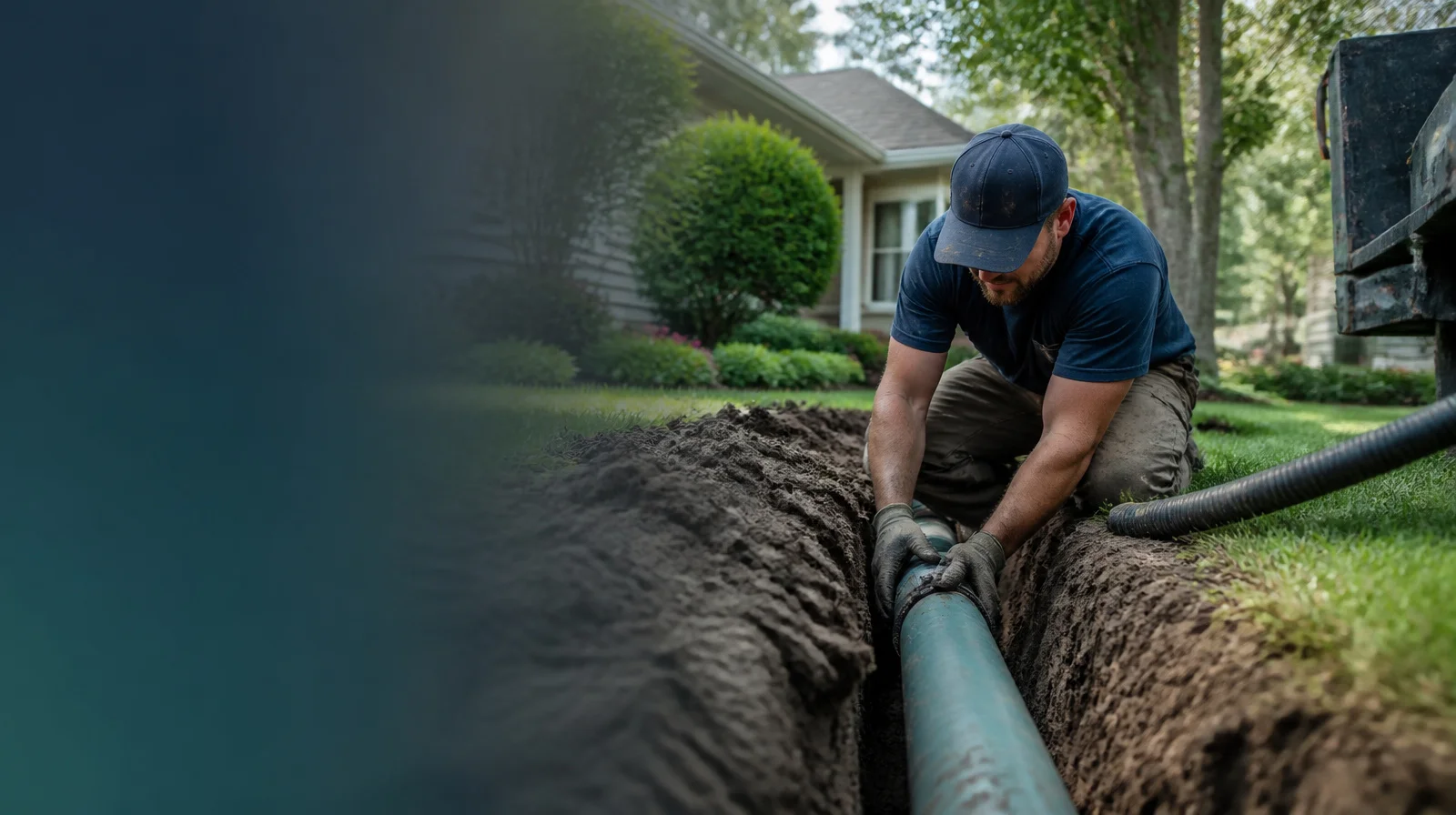
Straight answers about sewer fixes
Sewer repair and trenchless FAQs
Find clear info on sewer line repair, inspections, hydro jetting, and septic service. Use this guide to understand options, timelines, and how the process works.
Frequently Asked Questions
How do I know my sewer line needs repair?
Signs to watch for
Recurring backups, more than one slow drain at the same time, gurgling from toilets, and sewage odors are the most common red flags. Outdoors, look for unusually green or soggy patches of lawn, sinkholes, or standing water near the line route.
Why it happens
Lines can clog with grease or scale, shift from soil settlement, crack from freezing, or be invaded by roots. Older clay and cast‑iron pipes are especially prone to damage at joints.
What helps first
A camera inspection confirms the cause and location. From there, a pro can recommend hydro jetting for heavy buildup, spot repair for isolated breaks, or trenchless lining/pipe bursting for larger issues. Fast diagnosis prevents bigger problems such as foundation damage or contamination. The goal is a durable, code‑compliant sewer line repair with the least disruption possible.
What is trenchless or no‑dig sewer repair?
The idea
Trenchless methods fix or replace underground pipe with minimal excavation. They use small access points rather than a long open trench, which helps preserve landscaping, driveways, and sidewalks.
Common methods
- Cured‑in‑place pipe (CIPP) lining: A resin‑saturated liner is inserted and cured to form a new pipe inside the old one.
- Pipe bursting: A new pipe is pulled through as a conical head breaks apart the old pipe.
- Point repairs: Short liners reinforce a specific damaged section.
When it’s a fit
It’s ideal for cracks, gaps, root intrusion, and sections with moderate defects. If the host pipe is completely collapsed or severely misaligned, selective excavation may be required first. A camera inspection and measurements determine the best path. Trenchless options typically shorten timelines and reduce restoration work while delivering long service life.
What happens during a sewer camera inspection?
Typical steps
- Access: The technician locates a cleanout or creates a small access point.
- Survey: A high‑definition camera travels the pipe, recording footage of joints, roots, bellies, and breaks.
- Locate: A transmitter on the camera allows surface locating of problem spots and depths.
- Report: Findings are explained with time‑stamped video and notes so you can see exactly what’s happening.
How to prepare
Clear the area around the cleanout if you know where it is, and avoid heavy water use right beforehand. An accurate inspection is the foundation for choosing the right fix; whether hydro jetting, spot repair, trenchless lining, or full replacement... so the solution fits the specific condition of your line.
Is hydro jetting safe for my pipes?
How it works
Hydro jetting uses water at controlled pressures through specialized nozzles to cut grease, roots, and mineral scale from the pipe interior. The flow is adjustable to match pipe material and condition.
When jetting is best
It’s effective for stubborn clogs, heavy buildup, and restoring flow before lining. It cleans the full pipe circumference, not just a narrow path like a basic cable.
Important considerations
A pre‑jet camera check helps confirm pipe integrity, especially with older or brittle lines. In rare cases where a section is badly fractured or collapsed, targeted repair or replacement comes first. Used correctly by a trained tech, jetting is a safe, thorough cleaning method that supports longer‑lasting results for sewer line repair work.
Do you handle septic systems as well as sewer lines?
Services covered
In addition to municipal sewer laterals, contractors we match homeowners with can service septic components, including tank pumping coordination, inlet/outlet baffle repairs, distribution box issues, clogged lines, and leach field diagnostics.
How it’s evaluated
A camera inspection can be used on many septic lines, and hydro jetting may clear grease or biomat buildup feeding the tank or field. If tank structure or field capacity is in question, a septic‑focused evaluation guides the next steps. Whether it’s a septic or city connection, the aim is a safe, sanitary system that drains reliably.
How long do common sewer repairs take?
Typical durations
- Camera inspection: often under 60–90 minutes, depending on access and pipe length.
- Hydro jetting: a couple of hours for most homes; complex root removal can take longer.
- Trenchless lining or bursting: many projects are completed in a day once access and prep are ready.
- Open‑cut replacement: from one to several days based on length, depth, soil, and surface restoration.
What affects timing
Permit needs, utility marking, weather, and concrete or asphalt restoration can add time. A clear plan, parts availability, and accessible cleanouts keep jobs moving. The objective is a quality repair with minimal downtime and a clean finish.
Will my yard or driveway be disturbed?
Minimizing impact
Trenchless options rely on small entry pits, which dramatically reduce digging compared to traditional trenches. Protective mats, plywood paths, and soil‑separation practices help keep lawns and hardscapes tidy.
What to expect
Underground utilities are marked ahead of any excavation, and access points are placed to avoid trees and structures when possible. If pavement must be opened, patches are restored after testing. Landscaping and surfaces are returned to grade, with final cleanup and haul‑away of spoils. The goal is a safe work area, a reliable pipe, and property that looks good when crews leave.
Do you offer emergency help for sewer backups?
After‑hours availability
Yes. Coordinators route urgent requests to on‑call technicians 24/7. The emergency line at (716) 274-5808 is monitored so backups, overflows, or sewage odors can be addressed promptly.
What happens first
A quick assessment prioritizes safety; stopping active overflow and checking for electrical or appliance risks. Depending on conditions, the tech may perform initial clearing, set up containment, and recommend follow‑up steps like a camera inspection or targeted repair. Fast action limits water damage, reduces health risks, and keeps the path clear for a lasting fix.
How much do your services cost?
Pricing depends on the size and scope of the job. You can find approximate costs of these services here.
Contact Us Today for a Free Estimate
Fix sewer issues fast and protect your property.
Schedule your sewer line repair service today.
Free — no obligations